The Lawnmower King of Leicester City

Forty one years ago, the HR21 was launched in August 1978 and received rave reviews from the industry and its many users for its fantastic performance and reliability. Today, we have over 15 models available, with a world-beating range of engines and features.

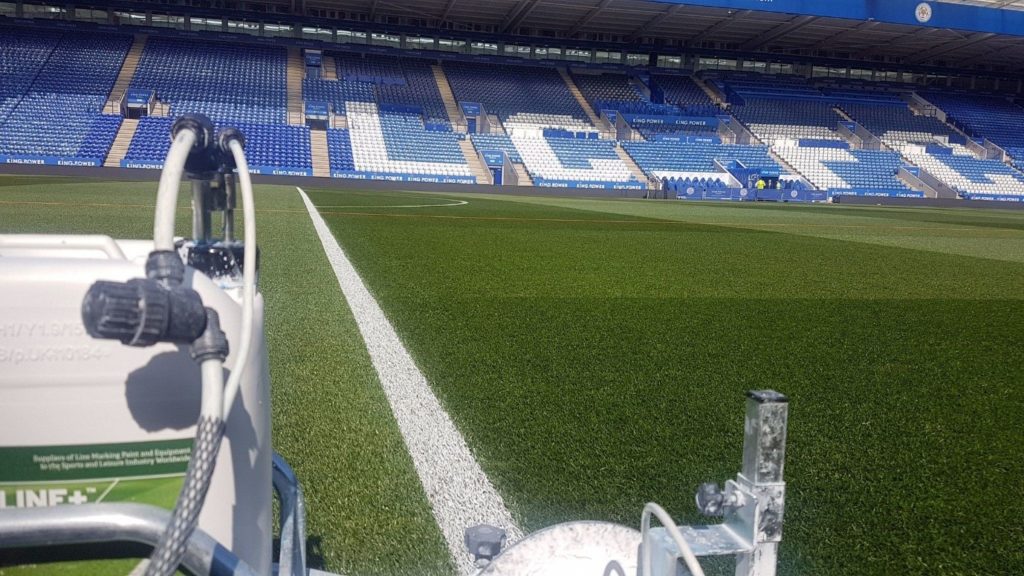
Honda UK recently spoke to John Ledwidge, the grounds manager at Leicester City FC and the man behind some of the most famous pitch designs in Premier League football. As the head of a team of groundsmen who cut the pitch at Leicester up to five times a day, he knows a thing or two about lawnmowers.
Honda: What first inspired you to become a groundsman? 

LEDWIDGE: When I was 13 years old I had the dream of being a footballer, like most 13-year-old kids. I just wanted to get onto the pitch where my heroes play so I wrote a letter to the groundsman of Coventry City, got a job working in the summer holidays with him, and fell in love with the job. I was a straight-A student at school but left knowing exactly what I wanted to do, which was to be a groundsman.

How many times do you cut the pitch at Leicester over the week? 

At this time of year we’ll cut the pitch between three and five times a day. But it’s not just the pitch at the stadium; there are seven more pitches at the training facility, so it’s quite a large operation. We spend a lot of money to create consistency of pitch across the training ground and the stadium, because the players need to train on a similar pitch to what they play on at the weekend. It’s really important they have the same standard of pitch.

What do you do when the match is actually on? 

There’s nothing we can do to the pitch, so I either catch up on a bit of work or watch the match. The rest of the ground staff will be watching the game – mostly to see what’s happening with the pitch rather than the football, which is a bit sad!
 

What are the best bits of your job? 

Building the department here from the ground up has been a definite highlight. We’ve gone from six staff to 14 and have implemented a lot of structure. We’re also building a new training ground. But being on the pitch on match day, just before kick-off, is a privileged place to be. It’s as close as you can get to being a player without actually being a player. Being there when they come out of the tunnel, having that experience of being there in the match environment is something that we all look forward to. Everyone loves match days.

Do you use Honda mowers at Leicester City?

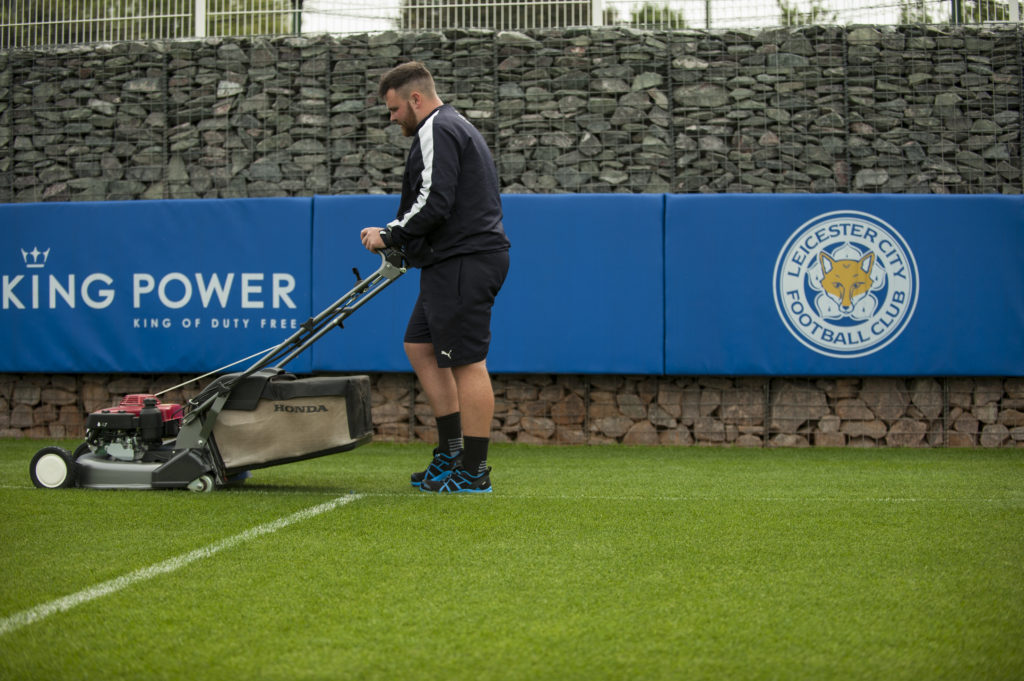
Yes, we’ve got a fleet of them. They’re the mower of choice for most Premier League clubs, not necessarily for the day-to-day cutting, but certainly using them to ‘clean up’ the pitch. After every game there will be an army of people using Honda mowers to clear up all the loose debris that’s kicked up during a game. We use the Honda 21-inch mower with the rear rollers. You’ll see them being used at most clubs.

Why do you prefer Honda mowers?

It’s for their efficiency and reliability. They have a well-refined engine that’s simple to work on. We have a head mechanic here and he doesn’t need to be working on them all the time. They’re not breaking down or causing us too many issues, which is important for an operation our size. Having a constant stream of mowers breaking down would set us back a lot in time and money, so that efficiency is very important.

How many Honda mowers do you have?

We have 18 Honda mowers in our fleet, and the mowers that aren’t Honda have Honda engines in them. They’re one of the most efficient petrol engines you can get.

You use pedestrian mowers rather than the ride-ons. Why do you prefer to use ones you walk with?

It’s all about the transfer of weight across the ground. The demand for pitch quality is so high at this level and we find that the finish we get with pedestrian mowers is better than the ride-ons. There’s a lot more weight put on the pitch with a ride-on than with a pedestrian machine, which doesn’t give as smooth a finish.

Have you got any ideas for new pitch designs for this season? 

We’re not allowed. The Premier League have stopped us doing them. They wanted to get more into line with FIFA and UEFA, who are very strict on that kind of thing. It’s a shame.

What’s your own lawn like at home? 

Awful! It’s terrible. We’re on a new estate and the lawns are slapped on whatever’s left after the house is built. I’ll have to dig the whole thing up and start again. It’s definitely not my centrepiece.

Is there a secret to growing a great lawn? 

It’s good horticultural practice – making sure that your lawn is fed and watered well, and at the right times. And make sure it’s cut regularly when it’s growing. It’s simple: grass is a very resilient thing and it’ll reward you if you treat it right.


Source: Honda Engine Room
Honda’s ATV History

Honda ATV History

1970s – present

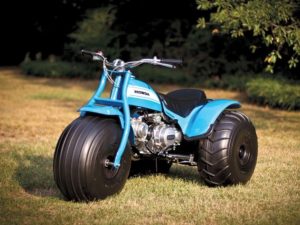
 Ever wonder where the ATV came from? Here is a brief summary of how Honda pioneered the concept:

1970s:

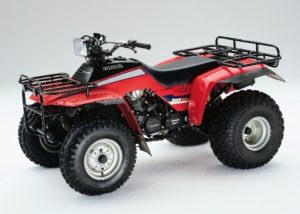
Honda first introduced the concept of the ATV in the 1970s when they produced the world’s first ATC (all-terrain cycle) named the ATC90. The three-wheel vehicle sent it’s 7 horsepower through a dual range four speed gearbox with automatic clutch. Honda expanded the range with a smaller ATC70 and then later in the decade updated the ATC90 into an ATC110. Though, it’s primary use was a recreational vehicle through the 70’s farmers were beginning to see the ATC as a tool to make their lives easier.

1980s:

Honda’s first four-wheel ATV was brought to market in 1984. The TRX200 was powered by a durable single-cylinder four-stroke engine running through a five-speed dual-range transmission with shaft drive and reverse. The introduction and popularity of the four-wheel ATV brought an end to the ATC three-wheeler range. On the eve of the ’90s, Honda introduced the 1988 FourTrax 300 and FourTrax 300 4×4, the revolutionary pair of hard-working Honda quads would ultimately become the most versatile, most popular ATVs in history. Combining an ideal balance of size, weight, power and capacity, powered by a 282cc air-cooled four-stroke single-cylinder engine, the FourTrax 300 sent its 20 horsepower through a five-speed transmission, automatic clutch and maintenance-free shaft drive. An ultra-low first gear helped it tow up to 850 pounds. Tough steel racks let it carry up to 66 pounds in front and 132 pounds in the rear.

1990s:

Throughout the 1980s, more and more people saw the ATV as a vehicle capable of getting thousands of different jobs done faster and easier. By the time the ’90s rolled in, the Honda FourTrax had become an essential part of peoples’ work life and nothing on wheels had ever been as versatile, reliable, efficient and affordable, on the job or on the weekend, as the Honda ATV.

In Ireland, having a Honda quad makes a host of jobs more efficient. In countries without our infrastructure, manpower and financial resources, the Honda ATV’s reliability and efficiency handled jobs that simply couldn’t be done before. Folks on other parts of the planet were discovering what Ireland had discovered, and began putting Honda ATVs to work, performing all manner of work that was either impossible, impractical or both. Whereas Honda ATVs were largely a domestic phenomenon before 1990, they were currently working in more than 35 different countries worldwide.

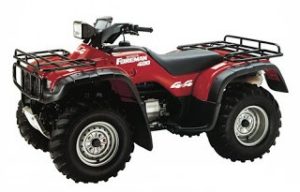
The 1995 Foreman 400 4×4 introduced the working world to the strongest, most efficient Honda ATV yet. Powered by an innovative longitudinal engine design that positions the crankshaft perpendicular to its axles, the ’95 Foreman’s front and rear drive shafts transfer power to all four wheels with fewer power-robbing directional changes, fewer parts, less weight and a lower center of mass.

In 1997 Honda introduced the advantages of its longitudinal power train to a broader circle of ATV users with the FourTrax Recon, a mid-size 2WD ATV that works hard and can scurry down a trail better than anything in its class.

In 1998 Honda debuted its Electric Shift Program (ESP) on an all-new 450cc ATV, the Foreman ES. Combining the convenience of an automatic with the control of a manual gearbox, ESP allowed Foreman ES riders to shift up or down with push-button ease. Honda’s meticulous approach means the only thing harder than building the toughest ATVs on earth is improving them. Improving the single most popular ATV model, the FourTrax 300 series, was a truly difficult undertaking.

2000s

Honda further improved the range when bringing to market the powerful efficiency of the 329cc longitudinal-powered drive train in an all-new chassis creating a better version of what was arguably the most versatile multipurpose ATV ever created.


Present:

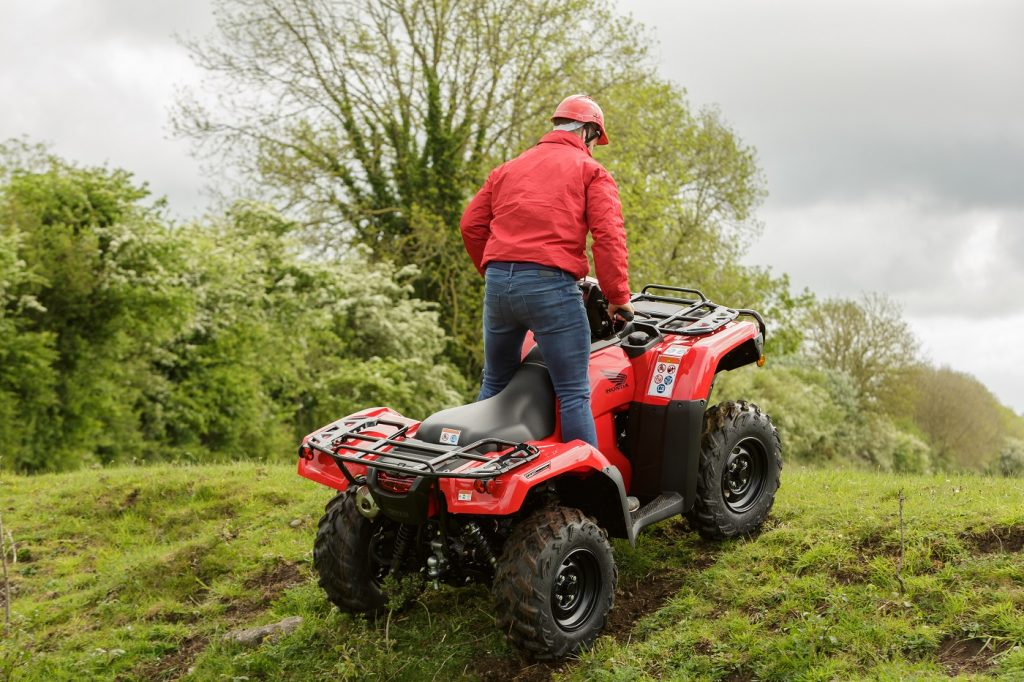
The present Honda ATV range offers a variety of ATVs to suit the needs of the Irish population. Honda TRX250 range will make light work of everyday tasks. The compact and agile TRX250 2wd is ideal for light and medium duty work and a great choice for yard, security or equestrian use. The TRX250 is available in both manual and electric shift. The Honda TRX420 ATV is a true all-rounder, a mid-size ATV with class leading power, performance and efficiency. With rugged next generation styling it offers exceptional pulling power, quick starts and great acceleration. Available in both manual and electric shift. The Honda TRX500 is a heavy-hitting ATV built for hard work and big loads – day in, day out. The TRX500 will work for you, with it’s low-down torque to it’s liquid cooled engine – It will help you tackle really rough terrain, as well as the big towing jobs. It’s an ATV you can rely on. Choose various transmissions and options including independent rear suspension and power steering.


Honda Ireland currently have a special offer running on the ATV range, contact your local dealer to place an order while stocks last, 0% finance available.


Honda Marine Engine best in class according to Boote Magazine review

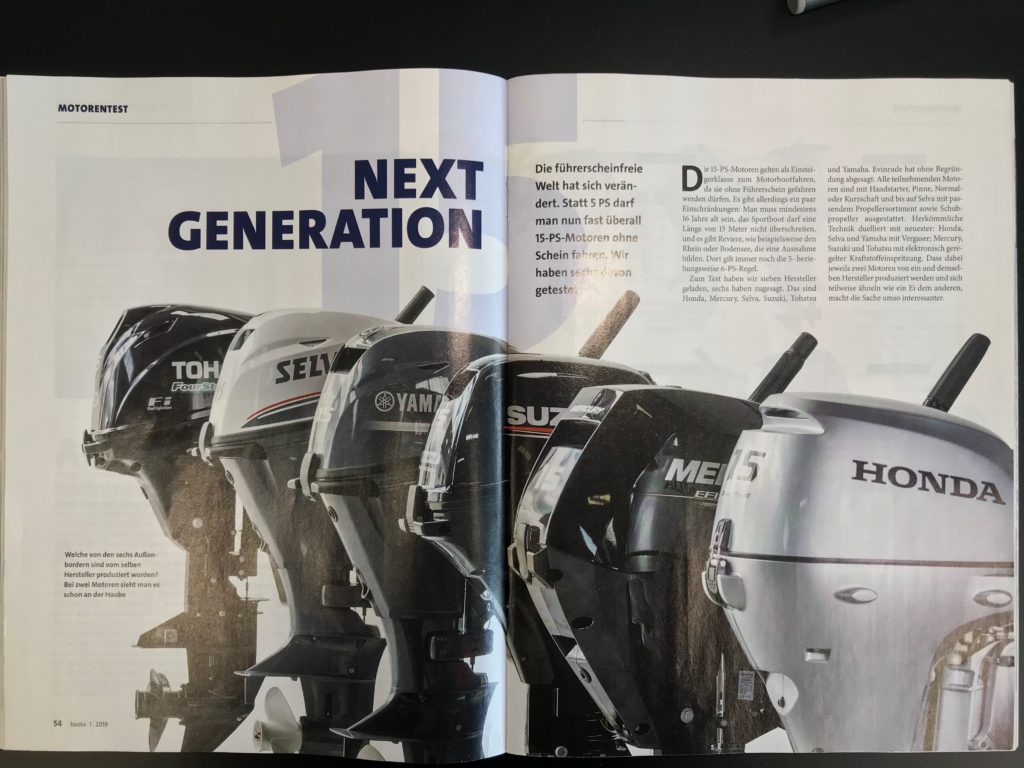
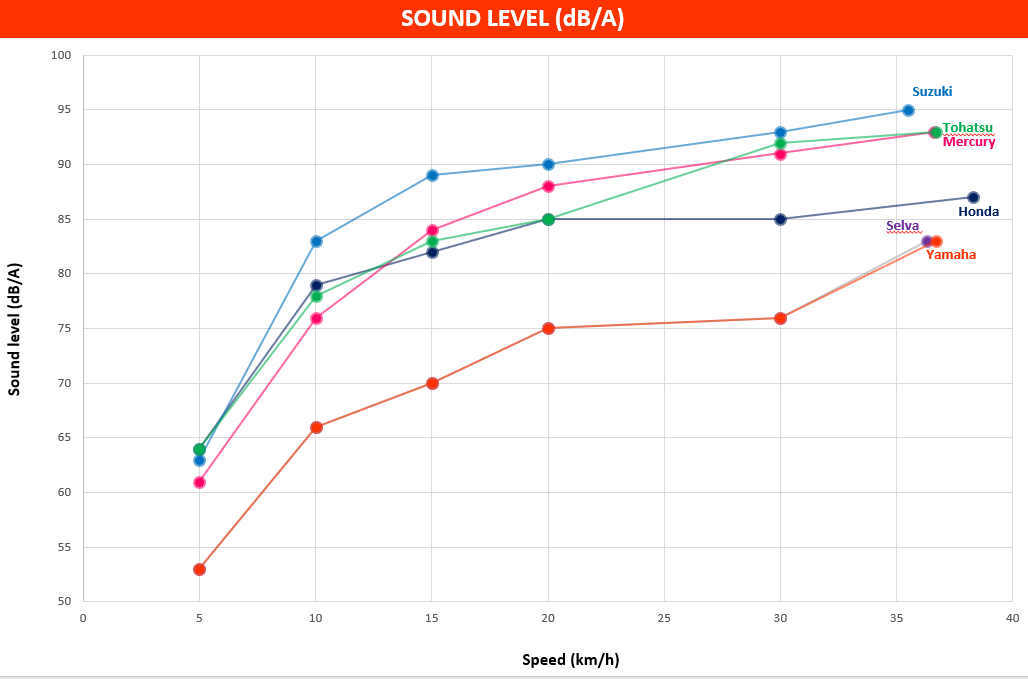
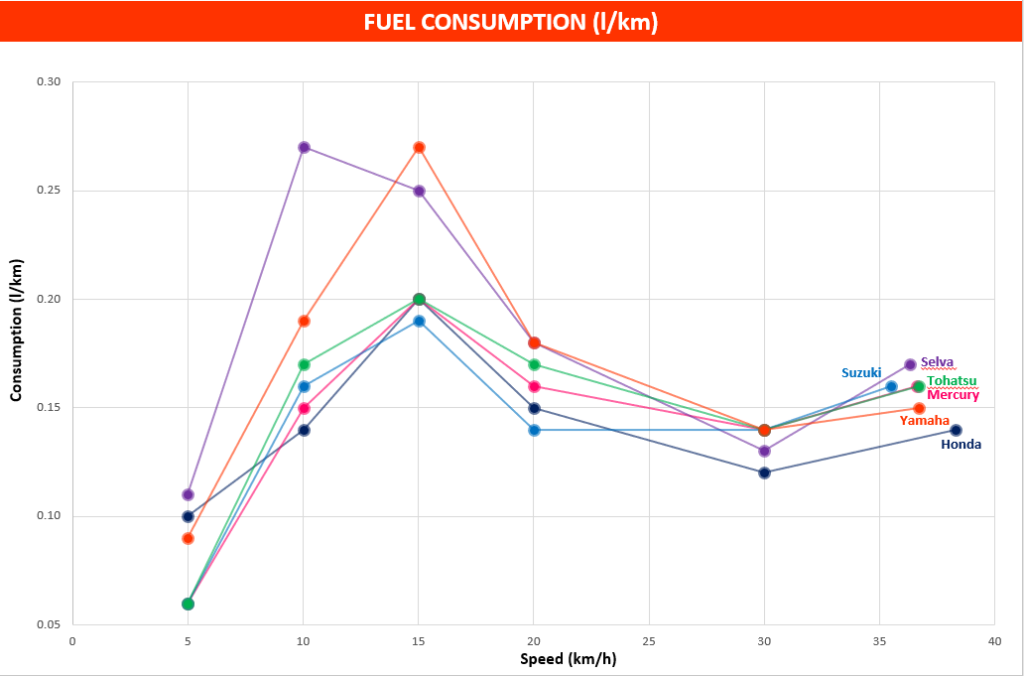
Boote magazine in Germany recently completed a review of 15hp outboard engines from six different manufacturers; Honda, Yamaha, Selva, Mercury, Suzuki and Tohatsu.


All motors were accompanied by a suitable range of standard propellers as well as thrust propellers. Conventional technology and cutting-edge technology went head to head: Honda, Selva and Yamaha fitted with carburetors, and Mercury, Suzuki and Tohatsu equipped with electronically controlled fuel injection systems.

Yamaha’s outboard came in at the heaviest weighing 57.1kgs, while Tohatsu came in at the lightest 44.87kgs. When analysing measured data such as the thrust values, ranges and fastest speed, Honda comes in 1st place, tied with Mercury.

The Suzuki outboard motor was classified in second place: in terms of technology and range in the mid sector, it would could have been awarded first place, but its fuel consumption falls short of the Honda when plaining. The Tohatsu occupies third place, followed by Yamaha and Selva.

Honda Ireland currently have stock available of Honda marine engines ranging from 2.3hp engines to 250hp.

If you’re interested in finding out more information on Honda outboard engines, you can get directions to your local dealer here.


Overview of Results: